
M Arshad Zahangir Chowdhury
I build interpretable AI for smart sensing and scientific instrumentation, grounded in classical mechanical engineering.
Rensselaer Polytechnic Institute, Troy, NY 12180.
chowdm6ATrpi.edu.









My research applies interpretable machine learning to smart sensing and scientific instrumentation, classifying gas-phase spectra, guiding X-ray fluorescence microscopy, and extracting signal from noisy, data-rich measurements, grounded in classical mechanical engineering, solid mechanics, and heat transfer. I build tools that stay physically consistent and transparent, so they extend rather than replace first-principles analysis, and I care as much about a model's real-time deployability as its raw accuracy.
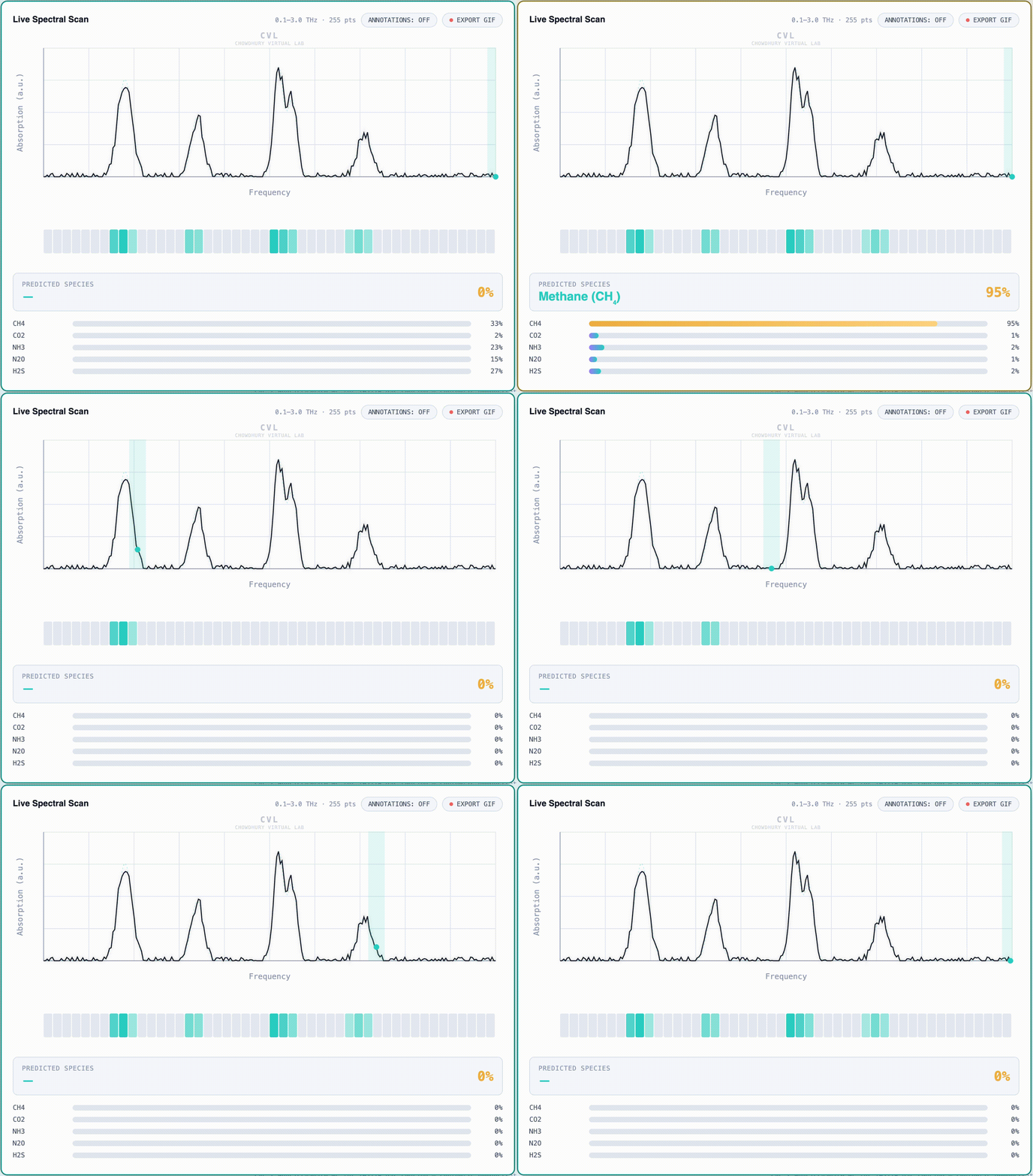
Please see my google scholar profile for a list of published work. My PhD research contribution and summary of major published works are given below as well as a simple preview of an interactive smart gas sensing tool I built as part of my research using deep learning and artificial intelligence.
Smart Gas Sensing
PhD Research Contributions
During my PhD, I developed a unified machine-learning framework for gas-phase species identification from spectroscopic data, addressing three fundamental challenges:
-
Spectral fingerprint learning
Quantified how accurately machine-learning-based detection methods can identify individual gas-phase species directly from measured spectroscopic fingerprints, with a focus on terahertz (THz) spectroscopic data.
-
Mixture component speciation
Extended these methods to the more challenging and practically relevant problem of species identification in gaseous mixtures, where overlapping spectral features and nonlinear interactions dominate.
-
Model limits and interpretability
Systematically investigated the fundamental limits of ML-based spectroscopic identification and developed approaches to interpret model decision-making, enabling physically meaningful insight rather than black-box predictions.
Key contribution:
My PhD research established the first machine-learning–based detection and mixture-speciation methods operating in both the infrared (IR) and terahertz (THz) spectral regimes, demonstrating a generalizable pathway for data-driven chemical sensing across spectral domains.
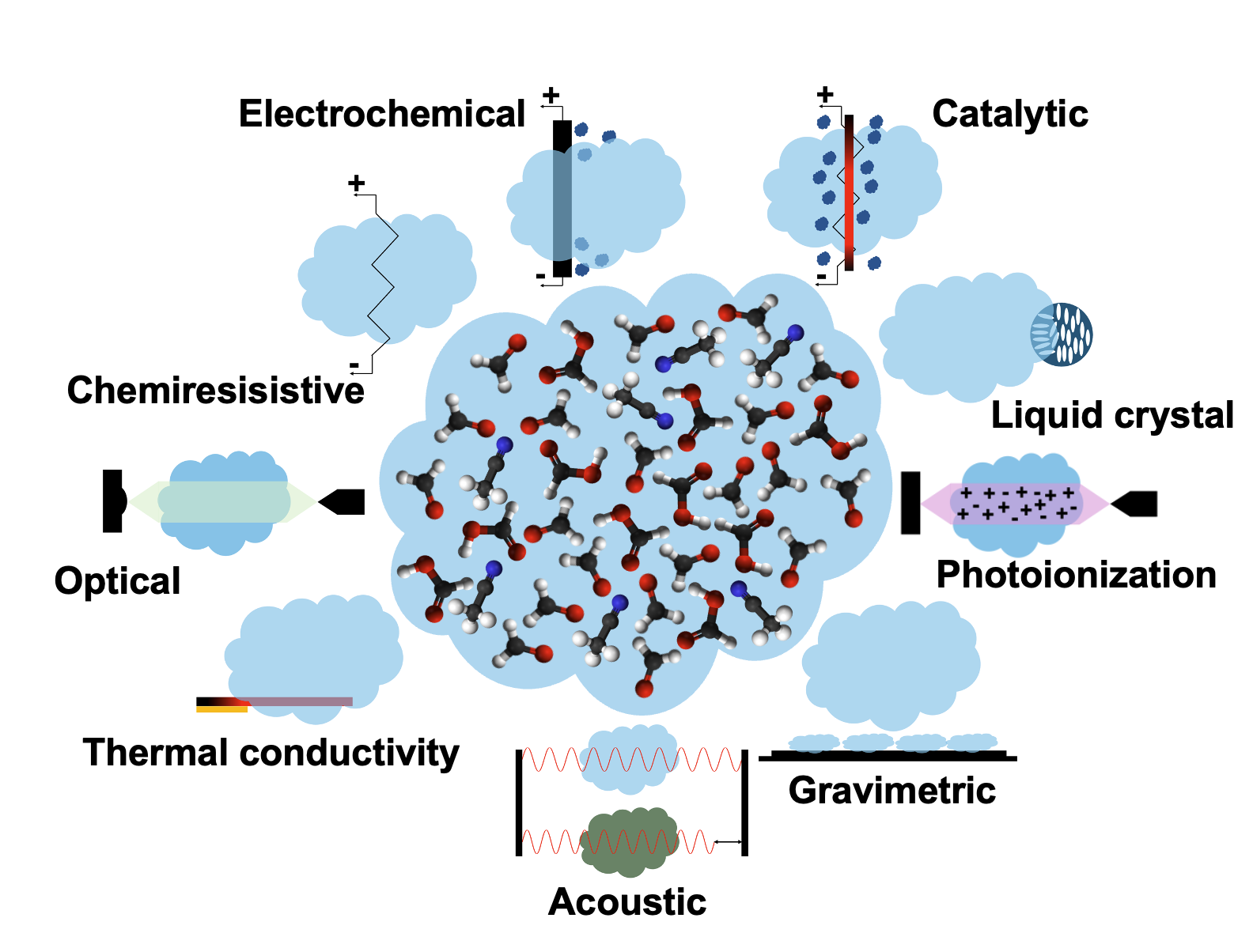
Artificial Intelligence in Gas Sensing
This review highlights how artificial intelligence—spanning machine learning, deep learning, explainable AI, and emerging generative models—is reshaping gas sensing. AI enables sensors to interpret complex, multiband signals with greater accuracy, sensitivity, and selectivity, supporting rapid multispecies detection across environmental, industrial, and medical applications. Explainable AI enhances trust and reveals underlying mechanisms, while generative models offer pathways to design new sensing materials. Looking ahead, increasingly autonomous workflows combining AI, automated synthesis, and real-time characterization may accelerate innovation. Together, these advances point toward intelligent, adaptive next-generation gas sensors with unprecedented performance.
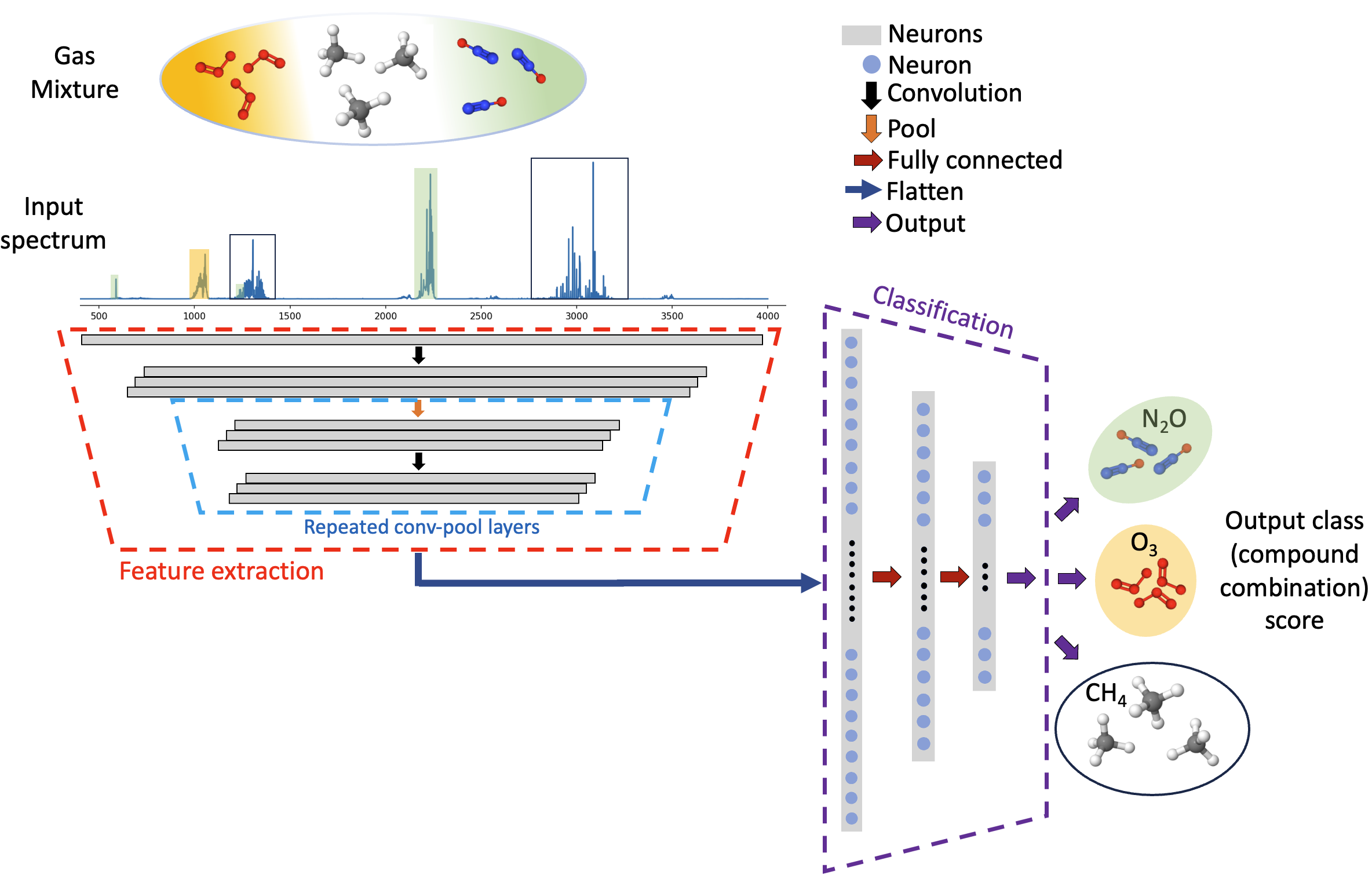
Deep Learning for Gas Sensing via Infrared Spectroscopy
This work develops a physics-informed deep learning framework for analyzing broadband (400–4000 cm⁻¹) infrared spectra of multicomponent gas mixtures. By leveraging simulated absorbance data and interpretable CNN architectures, the method identifies both mixture composition and the key spectral regions driving discrimination performance. The approach supports real-time, explainable spectral intelligence for environmental monitoring, industrial diagnostics, and adaptive gas-sensing platforms.
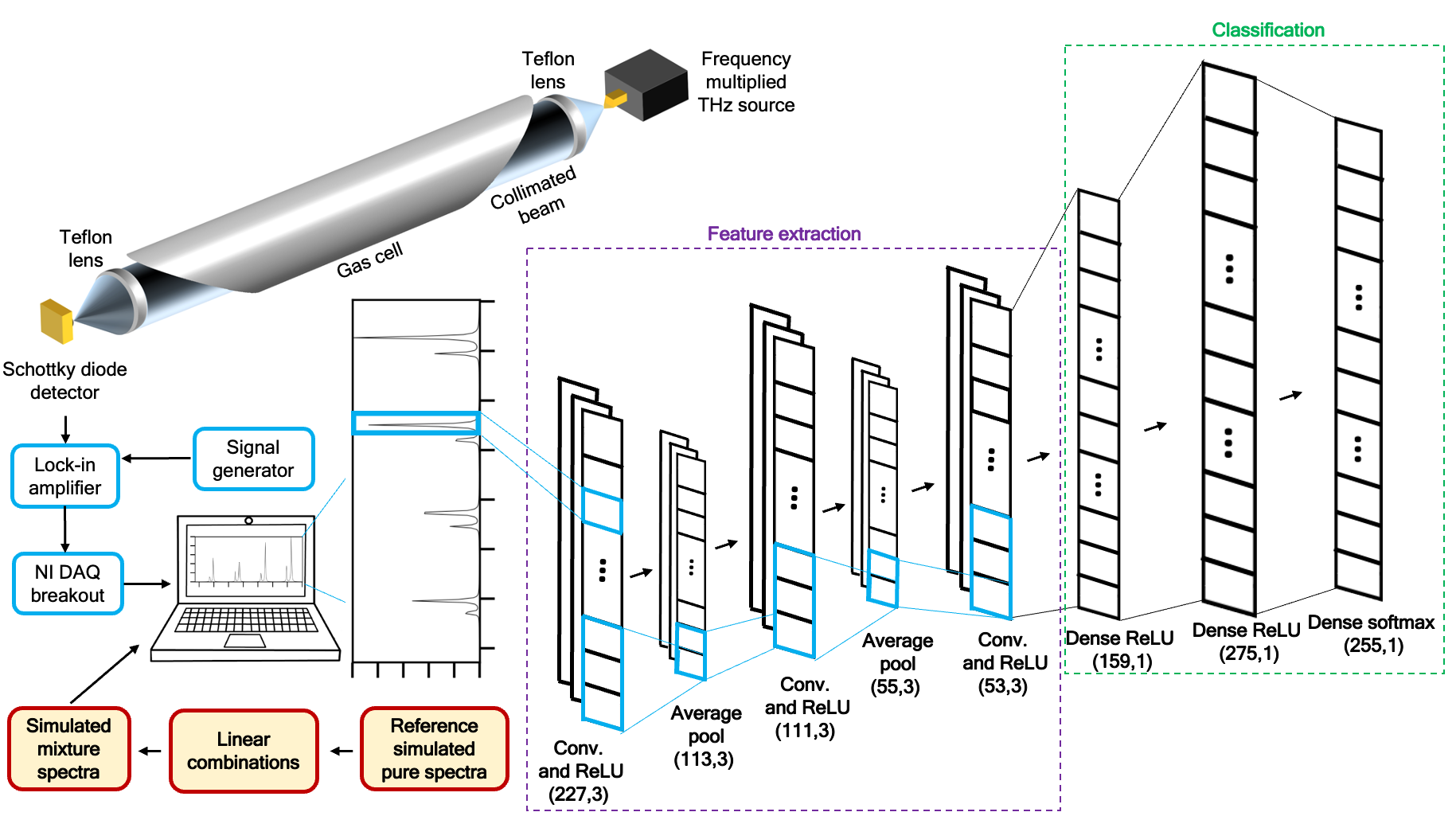
TSMC-Net: Deep Learning Mixture Component Identification
TSMC-Net introduces a deep learning architecture tailored for complex terahertz spectra in the 220–330 GHz regime. The model resolves multicomponent mixtures with high accuracy while revealing the spectral bands most influential for classification. This work advances machine-learning–enabled THz sensing by improving interpretability, robustness, and scalability for multispecies detection.
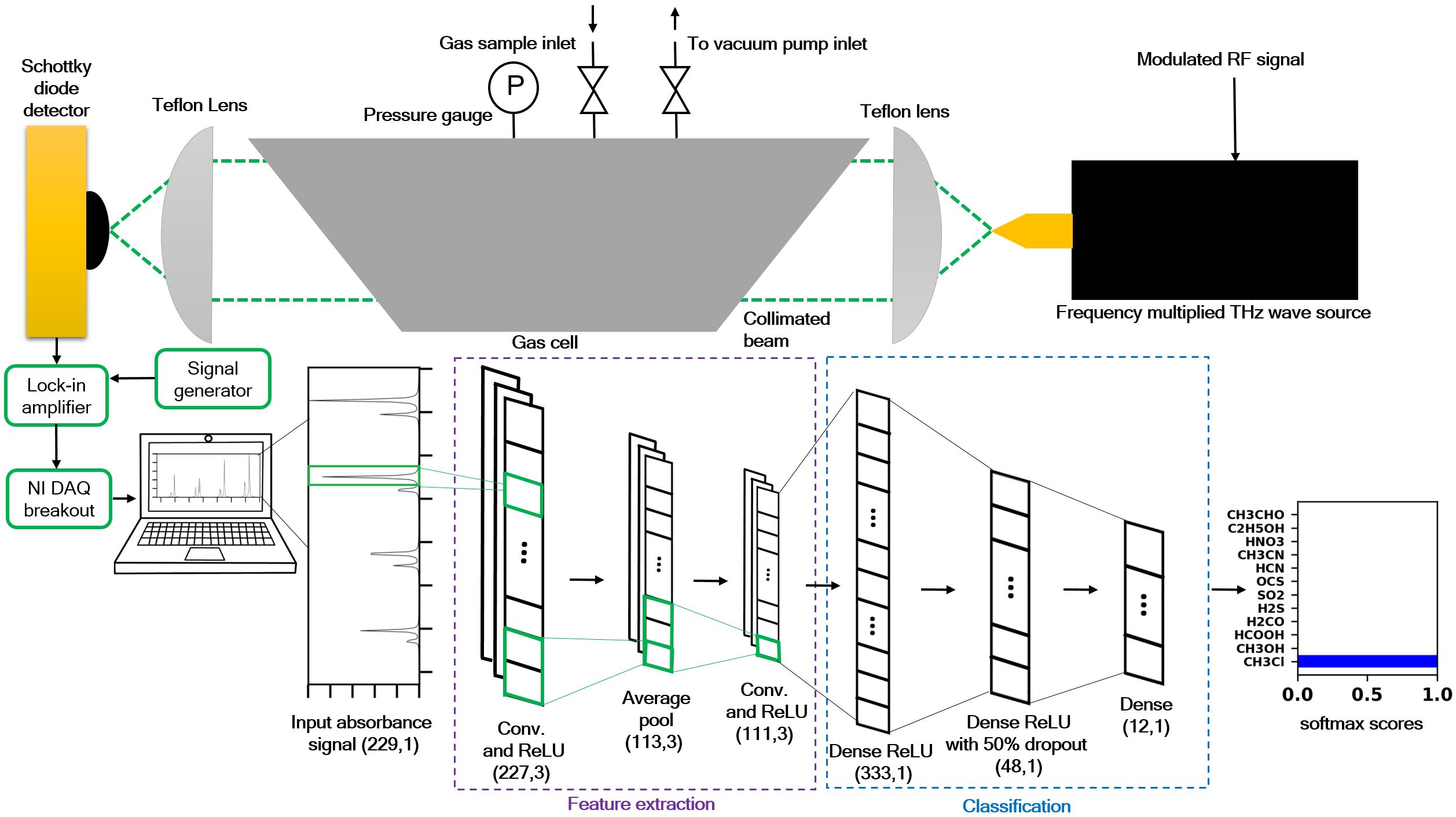
VOC-Net: Deep Learning Volatile Organic Compounds Classifier
VOC-Net applies a 1D CNN architecture to THz spectral signatures of volatile organic compounds, enabling rapid and selective VOC identification. The framework demonstrates how data-driven feature extraction can enhance chemical sensitivity in frequency ranges where conventional analytical techniques struggle. This approach contributes toward compact, intelligent VOC sensing systems for environmental and industrial applications.
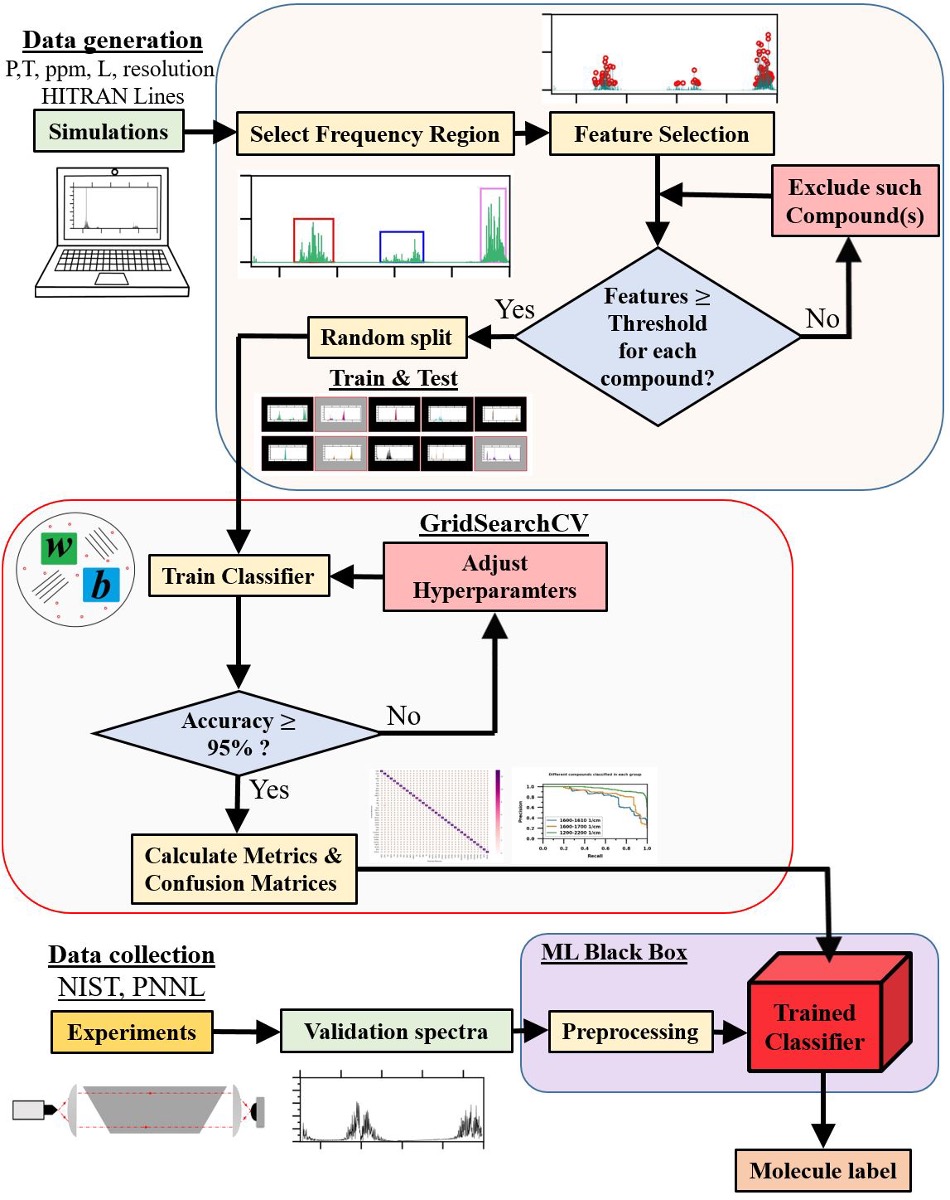
IR Spectra Classification
This project explores a support vector machine machines for broadband IR spectral analysis. Using simulated absorbance data, SVM models achieve reliable multigas classification across diverse frequency ranges and operating conditions. The work illustrates how lightweight, simpler models can complement deep learning approaches in resource-constrained sensing environments.
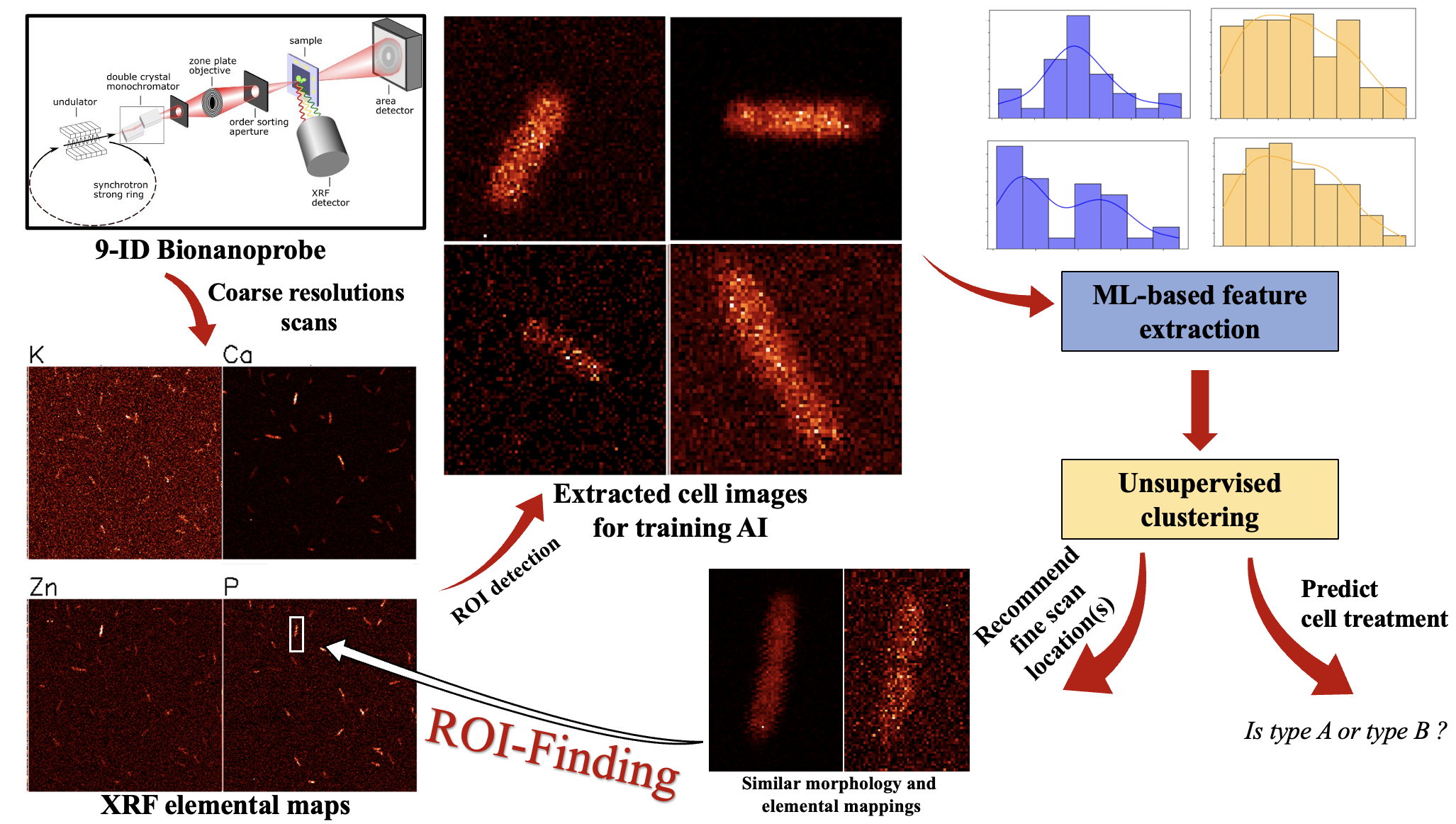
X-Ray Fluorescence Imaging ROI-Finder
ROI-Finder integrates clustering-based machine learning with X-ray fluorescence imaging to guide scans toward chemically informative regions. The tool accelerates data acquisition, enhances image quality, and reduces operator effort by prioritizing spatial areas with high diagnostic value. This approach supports autonomous or semi-autonomous operation of XRF systems in scientific and industrial settings.
Rotational Spectra Classification
This work trains machine-learning models on simulated rotational spectra to classify experimentally measured THz signals within the 220–330 GHz band. By linking simulated and measured domains, the method improves robustness to noise and instrument variability. The results demonstrate the potential of ML-enhanced rotational spectroscopy for high-selectivity chemical identification.
Supervised Undergraduate Research
Ian Oehlschlaeger, Machine learning for sports analytics.
Michael Ahn, Generative design of machine elements.
Runhan Gu, Classify and autoencode gas spectral data to make a gas sensing digital twin.
At Rensselaer Polytechnic Institute, Troy, New York
MANE 4030: Elements of Mechanical Design
MANE 4961: Machine Learning for Engineering
MANE 4910: Fluid Dynamics Laboratory
MANE 4740: Thermal and Fluids Engineering Laboratory
ENGR 4760: Engineering Economics
At Ahsanullah University of Science and Technology, Dhaka, Bangladesh
ME 201: Elements of Theory of Machine and Machine Design [Fall'14, Spring'15, Fall'15, Spring'16]
ME 2201: Mechanics of Materials [Spring'15]
ME 2110/ME 102/ME114: Mechanical Engineering Drawing I
ME 3204: Control Engineering Sessional
ME 3206: Heat Transfer Sessional
ME 4102: Heat Engines Sessional
ME 302: Fundamentals of Mechanical Engineering Sessional